Bathrooms are among the most resource-heavy areas in a home, especially regarding water usage. Accounting for nearly 40% of a household’s water consumption, they often feature materials like tiles and fixtures that require a great amount of energy to produce. This makes bathrooms a key focus in sustainable design, where water conservation and material efficiency can significantly impact a home’s environmental footprint.
World Toilet Day highlights the global challenges around clean water and sanitation. These challenges remind us of the value of sustainable design choices in everyday spaces like bathrooms. Such choices not only protect the environment but also create modern, practical spaces that support sustainable living.
When we learn
something, we share it.
Be the first to hear about market trends, new regulations, government programs, and opportunities shaping Greek real estate.
By adopting water-saving technologies and eco-friendly materials, homeowners can reduce waste, save energy, and lower their carbon footprint. Even minor changes, like installing low-flow fixtures or using natural materials, can have a big positive impact. Sustainable bathrooms also contribute to healthier living spaces and long-term value, both environmentally and economically.
Why Bathrooms Matter for Sustainability
When designing and renovating a bathroom with sustainability in mind, water-saving technologies should be a top priority. Dual-flush toilets, low-flow faucets, and showerheads are simple yet effective fixtures that reduce water waste while maintaining performance.
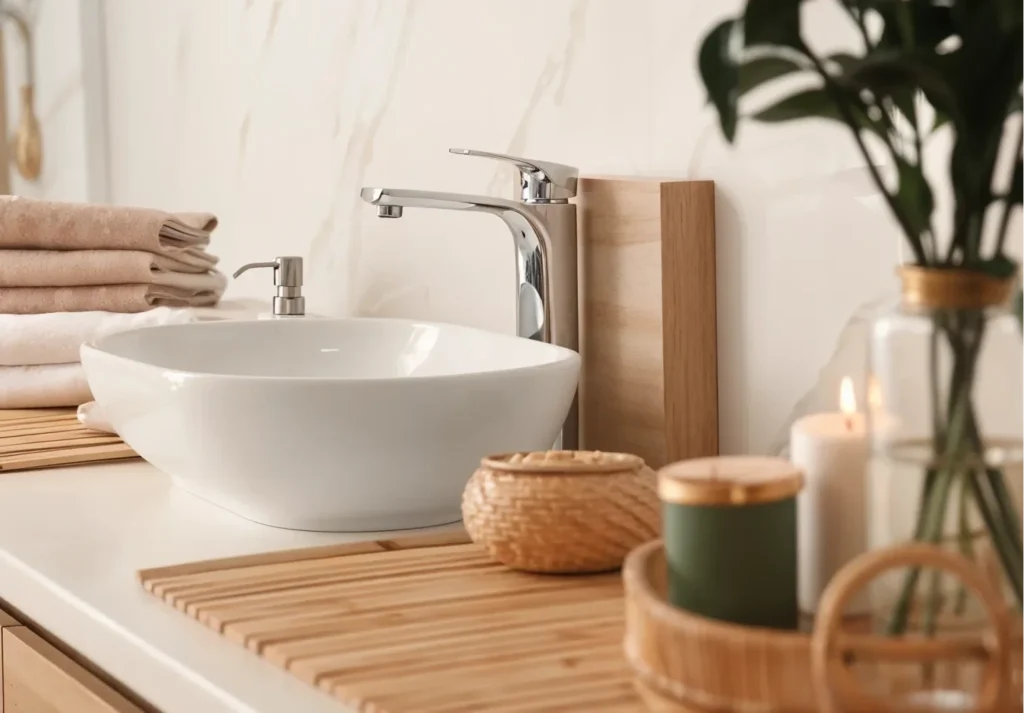
Eco-friendly materials are another essential aspect of sustainable bathroom design. Renewable materials like bamboo, cork, and reclaimed wood have a lower environmental impact than conventional materials such as plastic or synthetic finishes. Recycled glass tiles and non-toxic paints are also gaining popularity for their lower environmental harm and contribution to healthier indoor air quality.
Lighting is equally important. Energy-efficient LED lighting consumes less power and lasts longer than traditional bulbs, cutting down electricity use and reducing the need for frequent replacements. Lastly, proper insulation and ventilation enhance a bathroom’s energy efficiency, ensuring comfort while minimizing heating or cooling needs. Energy-efficient systems, like heated tower rails, can also boost sustainability and add comfort.
Key Sustainable Features in Bathroom Design
Sustainable bathrooms do more than benefit the environment – they also increase property value. Eco-conscious homebuyers or tenants prioritize features that improve water and energy efficiency, particularly in resource-heavy spaces like bathrooms. Properties with sustainable designs stand out by offering modern, cost-effective solutions aligned with the buyers’ values.
Beyond market appeal, sustainable bathrooms can lower maintenance costs. Water-saving fixtures and energy-efficient appliances reduce utility bills and typically last longer, minimizing replacements or repairs. Durable materials further ensure the bathroom remains functional and stylish for years, making it a worthwhile investment.
As sustainability grows in importance, homes with eco-friendly bathrooms are expected to gain even more value. Buyers and renters increasingly favor properties offering a better lifestyle with reduced environmental impact. For property owners, investing in sustainable bathroom design attracts a broader audience and supports environmental responsibility.
How Sustainable Bathrooms Add Value
Tips for Creating a Sustainable Bathroom
Transforming your bathroom into a more sustainable space doesn’t always require a full renovation. Even small, thoughtful changes can make a significant difference. Here are some practical tips to enhance both the efficiency and environmental friendliness of your bathroom:
1. Opt for Water-Saving Fixtures
Installing low-flow faucets, showerheads, and dual-flush toilets is one of the simplest ways to reduce water consumption. These fixtures are designed to use less water without sacrificing performance. Small upgrades like these can significantly conserve an essential resource.
2. Maximize Natural Lighting
Letting natural light in is a great way to reduce your reliance on artificial lighting during the day. Consider installing larger windows, skylights, or solar tubes to brighten your bathroom naturally. This not only cuts down on electricity use but also creates a warm, inviting atmosphere in your bathroom, reducing energy consumption.
3. Maximize Natural Lighting
Selecting materials like bamboo, recycled glass, or natural stone for bathroom surfaces can greatly reduce your environmental footprint. These eco-friendly options are durable and have a lower environmental impact compared to traditional materials. Plus, their longevity means fewer replacements and a more sustainable overall design.
4. Maximize Natural Lighting
Replacing traditional light bulbs with energy-efficient lighting can lower electricity consumption and reduce your carbon footprint. LEDs consume less energy, last longer, and provide bright, consistent lighting, making them a cost-effective and sustainable choice for your bathroom.
5. Adopt Smart Water Technologies
Smart water systems are an excellent way to monitor and control your water usage. These technologies can help detect leaks, regulate flow, or automatically shut off water when it’s not in use, all of which contribute to water conservation and lower utility costs.
6. Add Plants for Natural Air Quality Improvement
By adopting these simple yet effective strategies, you can create a more sustainable bathroom that helps reduce your environmental impact while also improving its efficiency, comfort, and longevity. Every small change you make counts towards a greener future.
The future of sustainable bathroom design is evolving rapidly, with ongoing advancements in technology and materials. As environmental concerns grow, innovative water-saving and energy-efficient solutions will become even more integral. Smart water systems that monitor and adjust water usage are already popular and will likely become standard.
Circular economy principles are also gaining traction in bathroom design. This involves creating products and systems that can be reused, refurbished, or recycled, reducing water waste and extending material lifespans. With more manufacturers adopting sustainable practices, homeowners will have better access to eco-friendly renovation options.
Sustainability in bathroom design isn’t just about environmental impact – it’s also about creating healthier, more efficient spaces. As awareness of these benefits grows, demand for eco-friendly features will rise, pushing property developers and homeowners to adapt. Meeting these expectations is essential for contributing to a sustainable future.
The Future of Sustainable Bathroom Design
Tell us what you're looking for and we'll move it forward
Start by getting in touch, we’ll curate the right options for you. Feel free to decide your next step.